Custom Home vs Production Home: What's The Difference?
This comparison helps homeowners understand how custom and production building differ so they can choose the approach that fits their priorities. It is an objective resource — neither approach is universally better. Lakewood Custom Home Group LLC builds custom homes, but both paths serve different homeowners well.
A custom home is designed and built around a specific homeowner, property, and project scope. A production home is built from a builder's predefined plans, options, and communities using standardized construction systems. The difference is not quality alone — it is who controls the layout, the lot, the selections, and the process.
What Is The Difference Between A Custom Home & Production Home?
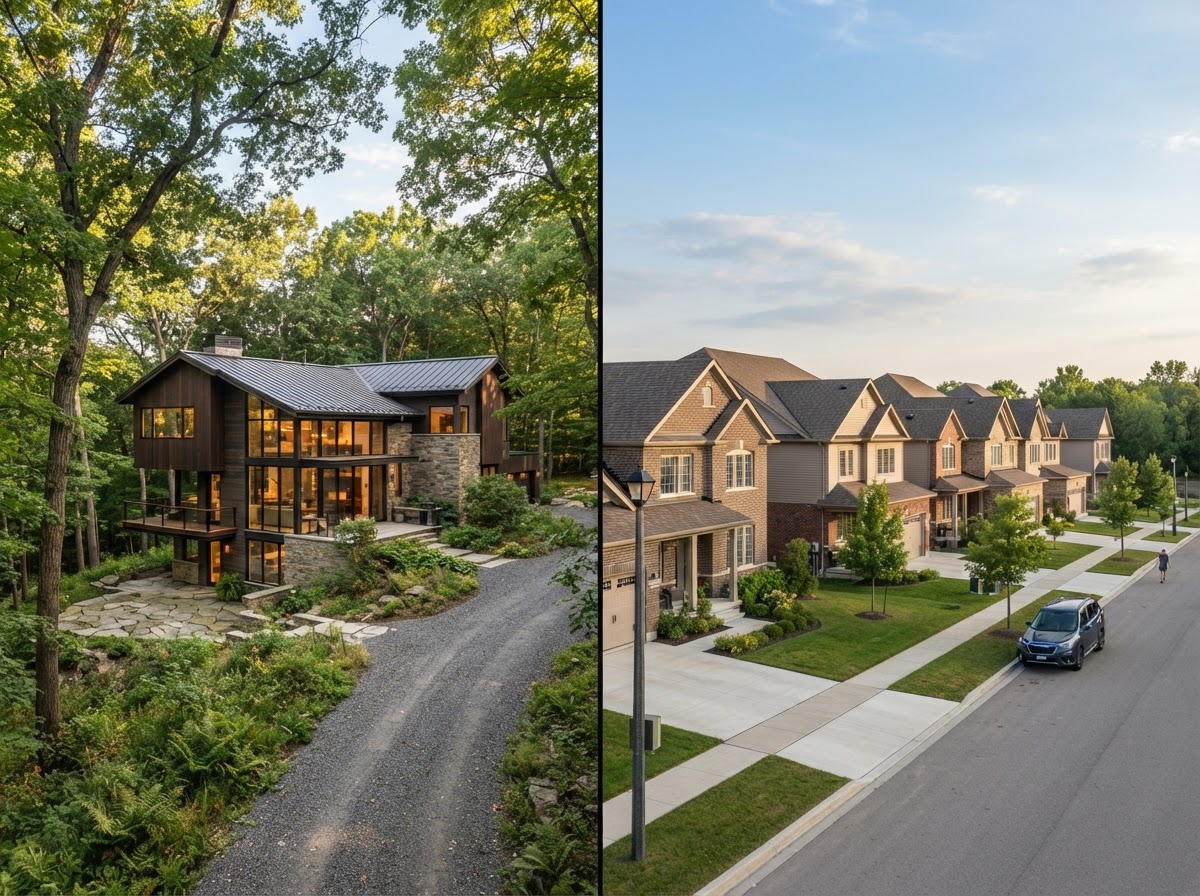
A custom home is designed and built around a specific homeowner, a specific property, and a defined project scope. The layout, the lot, the finishes, and the process are shaped by the homeowner's needs and the land. Every decision — from footprint to fixture — is made in the context of that specific project.
A production home is built using a builder's predefined plans, options, and communities, often within a planned development or a standardized building program. The homeowner selects from an established set of floor plans, elevations, and finish packages rather than designing from scratch. The process is more standardized, which is part of its appeal.
Business models vary across both categories, and the line between them is not always sharp — some builders offer semi-custom options within a production framework. But the core distinction holds: a custom home is built around the homeowner and the property, while a production home is built from a predefined system the homeowner selects into.
Custom Home vs Production Home At A Glance
The table below compares the two approaches across the categories that most often determine which fits a homeowner. Neither wins every category — each trades off differently, and the right choice depends on which tradeoffs match a household's priorities.
| Consideration | Custom Home | Production Home |
|---|---|---|
| Lot choice | Homeowner chooses or owns the land; the home is planned around it. | Builder offers lots within a community; selection is from available inventory. |
| Floor plan flexibility | Layout is designed around the household's needs and the property. | Selection from predefined plans; modifications are limited. |
| Exterior customization | Exterior is designed for the property and the homeowner's preferences. | Exterior chosen from offered elevations and options. |
| Interior selections | Cabinetry, flooring, fixtures, and finishes selected individually. | Selections made from offered packages and option lists. |
| Garage options | Size, attachment, and orientation planned for the property and use. | Garage options defined by the plan and community standards. |
| Home size | Sized to the household's needs and the lot's buildable area. | Sized within the range of offered plans. |
| Construction process | Project-specific, coordinated around the property and scope. | Standardized process within the builder's system. |
| Design involvement | Homeowner is involved throughout design and selections. | Involvement focused on selecting from offered options. |
| Change flexibility | Changes are possible but carry cost and schedule consequences. | Changes are more constrained by the standardized process. |
| Timeline predictability | Less predictable; depends on property, scope, and selections. | Generally more predictable within the builder's system. |
| Budget predictability | Depends on design and selections; established through a quote. | More predictable within offered plan and option pricing. |
| Neighborhood constraints | Fewer, unless the lot is within a regulated community. | Community standards and HOA rules may apply. |
| Unique property planning | The home is planned around the specific property's conditions. | Less suited to unusual or non-standard properties. |
Who Is A Custom Home Best Suited For?
A custom home tends to fit homeowners who prioritize a specific property, a personalized layout, or needs that a standardized plan does not meet well. It is not universally superior — it is the better fit when the household's priorities align with what custom building offers.
Custom building often makes sense for homeowners who already own land or want a specific location outside a planned development; who need a layout substantially different from offered plans; who have unique garage, workshop, or accessory structure needs; who want a home office, multi-generational space, or an ADU planned from the start; who prioritize outdoor living designed for the property; who are planning for long-term use and want the home to adapt; or who want non-standard features that a production program does not offer.
The tradeoff is that custom building involves more decisions, a less predictable timeline, and a budget established through a project-specific quote rather than a published price. For homeowners who value control over those tradeoffs, custom is the right path.
Who Might Prefer A Production Home?
A production home is not a lesser choice — it is a different one. For homeowners whose priorities align with a standardized process, it can be the better fit, and recognizing that honestly helps a homeowner choose well.
Production building may suit homeowners who want a more standardized process with predetermined plans; who value a community-based setting with shared amenities and standards; who prefer a simpler selection structure built around offered packages; who find it easier to compare between options when the choices are bounded; or who want a more predictable decision process with fewer open-ended choices.
The tradeoff is less control over layout, lot, and selections, and constraints from community standards. This guide does not make pricing claims about either approach, because cost depends on the specific project and the specific community. Both can represent good value for the right homeowner.
Questions To Ask Before Choosing How To Build
The decision between custom and production comes down to which tradeoffs match a household's priorities. The questions below help clarify that choice.
Ask: Do I already own land, or do I want a specific property? Do I want to modify the floor plan substantially, or is a predefined plan acceptable? Do I need specialty garage or ADU space? How important are unique finishes and selections? Do I want a specific location outside a planned development? How much decision-making do I want throughout the process?
The answers point toward one approach or the other. There is no wrong answer — only the one that fits the household. The questions that follow address the most common comparison concerns Lakewood Custom Home Group LLC hears from Milton homeowners.
Considering A Custom Home In Milton?
If you are weighing a custom home in Milton or Santa Rosa County — whether on land you own or a property you are considering — Lakewood Custom Home Group LLC builds residences planned around the site and the people who will live in them.
Related planning resources: the cost guide, the timeline guide, the build on your lot guide, and the custom home checklist. For the service itself, see custom home building and build on your lot.
Request a project consultation using the form below, or call 850-572-4233.
Questions About Custom Home vs Production Home
Not always, but custom construction typically costs more per square foot because it is built around a specific homeowner, property, and scope rather than a standardized plan. A meaningful comparison depends on the specific project and the specific production community, not on a general average.
Considering A Custom Home In Milton?
Custom and production building serve different homeowners. Lakewood Custom Home Group LLC builds custom residences planned around the property and the household — and helps Milton and Santa Rosa County homeowners decide whether that path fits their priorities.
Request a project consultation using the form below, or call 850-572-4233.