
How Long Does It Take To Build A Custom Home?
This guide walks through what happens before construction, the main stages of a build, and the variables that can change a timeline. It is a planning resource — not a guarantee. Actual duration depends on the project and is discussed during a consultation.
There is no universal timeline for a custom home. Total project duration depends on design readiness, the property and site, required approvals, home size, structural complexity, selections, material availability, trade sequencing, weather, and changes made during construction. A reliable schedule is built around a specific project, not a published average.
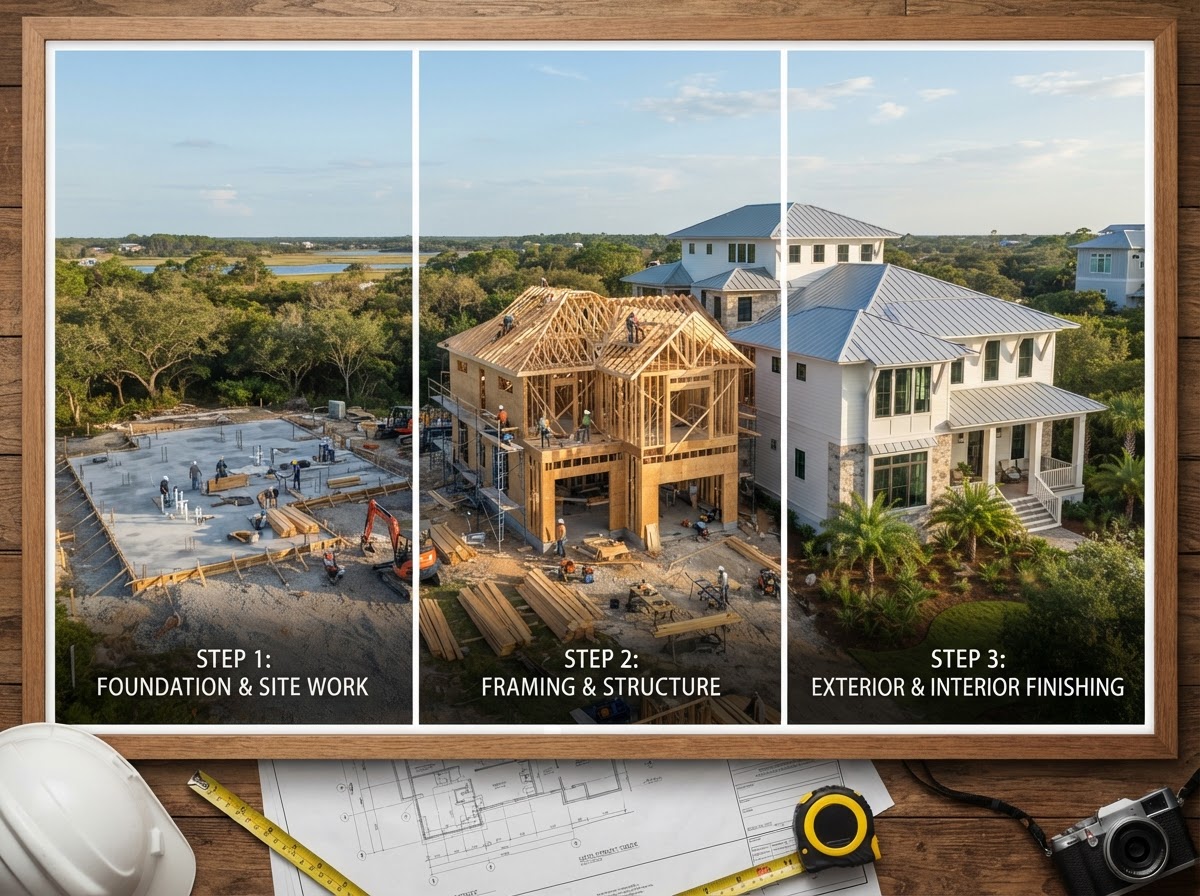
How Long Should You Expect A Custom Home Project To Take?
A custom home timeline is project-specific. The total time from first conversation to move-in reflects how ready the design is, what the property requires, how long approvals take, how large and complex the home is, what selections are made, and how conditions evolve during construction. No two projects follow an identical schedule.
Several factors shape the total duration: design readiness, property and site conditions, required approvals, home size, structural complexity, finish selections, material availability, trade sequencing, weather, and changes made during construction. Some of these are within a homeowner's control; others are not. Understanding the difference helps set realistic expectations.
Because permitting timelines, material availability, and weather all change over time, this guide avoids inventing a fixed duration. Instead it explains the phases and the variables so homeowners can see where time goes and where decisions influence the schedule. A project-specific timeline is established during a consultation with Lakewood Custom Home Group LLC.
What Happens Before The First Day Of Construction?
The period before construction is often underestimated, yet it strongly influences how efficiently the build itself proceeds. A project that enters construction with finalized plans, aligned budget, completed approvals, and ordered selections typically moves more smoothly than one that is still being resolved.
Pre-construction work includes defining project goals, evaluating the property, developing or refining plans, coordinating design selections, arranging engineering where required, gathering survey or site information where needed, completing applicable approvals, and aligning the budget with the scope. Each of these can take time, and each affects the construction phase that follows.
Selections made early — cabinetry, countertops, flooring, fixtures, windows, and doors — help keep the construction schedule on track, because long-lead items can be ordered in time for their installation window. Late selections are one of the most common causes of schedule delays, because the build cannot proceed past a point that depends on a decision that has not been made.
This stage can strongly affect construction efficiency. A clear, approved, and fully specified plan reduces the changes, questions, and waiting that slow a build. Lakewood Custom Home Group LLC works with Milton homeowners to resolve as much as possible before the first day on site.
What Are The Main Stages Of Building A Custom Home?
Construction follows a broadly predictable sequence, though the actual order can vary with the project. Understanding the stages helps homeowners see where their home is in the process and what comes next.
The sequence below is typical, but it is not a guaranteed schedule. Site conditions, weather, material availability, and design complexity all influence how long each stage takes and how the stages overlap.
- 1
Site preparation
Clearing, grading, drainage, and access work before the foundation.
- 2
Foundation
Footings and foundation walls or slab placed and cured.
- 3
Framing
Walls, floors, and roof structure erected; the home takes shape.
- 4
Roofing & exterior enclosure
Roofing installed and the home dried in against weather.
- 5
Rough mechanical, electrical & plumbing
Systems installed within walls and floors before closing them up.
- 6
Insulation
Thermal and acoustic insulation installed throughout.
- 7
Drywall
Wallboard hung, finished, and sanded; interior spaces defined.
- 8
Interior finishes
Paint, trim, doors, and finish work applied.
- 9
Cabinets, countertops & fixtures
Kitchen, bath, and built-in elements installed.
- 10
Flooring, trim & paint
Final flooring, trim, and finish coats completed.
- 11
Exterior completion
Siding, exterior detailing, driveways, and outdoor elements finished.
- 12
Final reviews & project completion
Inspections, walkthrough, and completion of remaining items.
What Causes Custom Home Timelines To Change?
Even a well-planned project encounters variables. Some delays are within a homeowner's control; many are not. Recognizing the common causes helps homeowners understand where a schedule can flex and where it cannot.
The table below summarizes the factors that most often change a custom home timeline and whether they are generally within the builder's control. No project is immune to all of them, and most projects encounter at least a few.
| Factor | Effect On Timeline | Typically Within Builder Control? |
|---|---|---|
| Complex site conditions | Additional preparation, grading, or foundation work. | Partly |
| Plan revisions | Rework, re-estimating, and re-approval can add time. | No — homeowner driven |
| Change orders | Scope changes during construction add labor and material time. | No — homeowner driven |
| Material availability | Long-lead or unavailable items delay installation. | Partly |
| Specialty selections | Custom or imported items may have extended lead times. | No — selection driven |
| Inspection scheduling | Inspections must be sequenced and may wait on availability. | Partly |
| Weather | Rain, wind, or cold can halt exterior work. | No |
| Utility coordination | Connection scheduling depends on providers. | Partly |
| Trade sequencing | Trades must follow one another; gaps extend the schedule. | Partly |
| Complex structural features | Complicated framing or structural elements take longer. | No — design driven |
| Large custom elements | Custom stairs, cabinetry, or millwork add labor time. | No — design driven |
| Homeowner selection delays | Late decisions stall dependent stages. | No — homeowner driven |
How Can Homeowners Help Keep Decisions Moving?
Homeowners influence the timeline more than they sometimes realize. The decisions that most often keep a project on schedule are made early and communicated clearly.
Make important selections early — cabinetry, countertops, flooring, fixtures, windows, and doors — so long-lead items can be ordered in time. Respond to decisions promptly when they arise during construction. Understand that changes have schedule consequences, not just cost ones. Finalize must-haves before construction begins. Avoid unnecessary late changes, which are among the most common schedule disruptors. And keep communication clear so questions are resolved quickly.
The questions below address the timeline concerns Lakewood Custom Home Group LLC most often hears from Milton homeowners.
Start Planning Your Custom Home Project
A realistic timeline starts with a realistic plan. If you are considering a custom home in Milton or Santa Rosa County, Lakewood Custom Home Group LLC can walk through your property, scope, and schedule expectations in a project consultation.
Related planning resources: the custom home cost guide, the build on your lot guide, and the custom home building checklist. For the service itself, see custom home building and build on your lot.
Request a project consultation using the form below, or call 850-572-4233.
Questions About Custom Home Building Timeline Guide
Generally yes — more square footage means more framing, finishing, and mechanical work. But size is only one factor. A large but simple home can build faster than a smaller home with complex rooflines, custom stairs, or intricate finishes. Complexity often influences duration as much as size.
Start Planning Your Custom Home Timeline In Milton
A custom home timeline is built around a specific project, not a fixed average. Lakewood Custom Home Group LLC helps Milton and Santa Rosa County homeowners understand the phases and variables that shape how long a build takes.
Request a project consultation using the form below, or call 850-572-4233 to discuss your property and schedule expectations.